If you’ve spent any time around hardware development, you already know this: a brilliant product idea can fall apart because of one weak board.
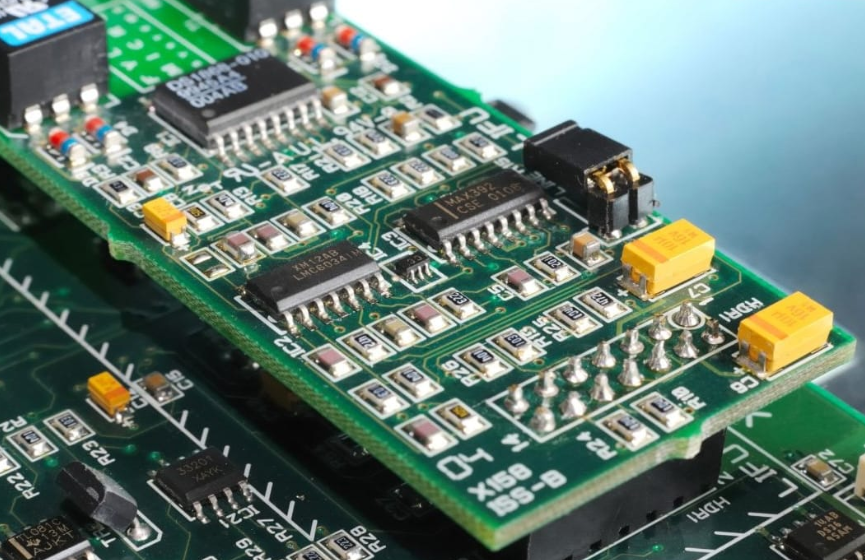
Printed circuit boards sit at the center of almost every modern device — from industrial automation systems to telecom infrastructure and compact robotics. Yet they’re often treated as background components instead of what they truly are: the structural and electrical backbone of the entire system. Engineers exploring production capabilities and supply chain standards often look to industry sources like globalwellpcba.com to better understand how advanced fabrication and assembly processes are evolving in today’s competitive electronics environment.
Because PCB technology has changed dramatically over the last decade — and expectations have changed even faster.
PCBs Are No Longer Simple Connection Platforms
Years ago, boards were relatively straightforward. Fewer layers. Lower speeds. More room for error.
That’s not the case anymore.
Today’s designs demand higher density, tighter tolerances, better thermal control, and cleaner signal paths. A board might need to handle high-frequency data transmission, withstand vibration inside a robotic system, or survive years of heat cycling in industrial equipment.
At that level, layout decisions are no longer just about fitting components — they directly affect performance, noise behavior, and long-term reliability.
Fabrication Has Become a Precision Game
Modern PCB fabrication is incredibly precise. Automated drilling, laser structuring, controlled impedance routing, and refined etching processes allow manufacturers to create complex multilayer boards that would have been nearly impossible years ago.
Smaller footprints and higher speeds mean there’s less room for mistakes. A slight deviation in trace width or material selection can affect signal integrity. Poor thermal planning can reduce product lifespan. Even stack-up design now plays a much bigger role in electrical stability.
This is why fabrication partners matter. Experience, process control, and material knowledge make the difference between a board that works in testing and one that performs reliably in the field.
Rigid-Flex Designs Are Solving Real Engineering Problems
Rigid-flex PCBs used to feel specialized. Now they’re becoming mainstream in advanced applications.
By combining rigid sections with flexible circuits, engineers can reduce connectors, eliminate weak mechanical joints, and fit boards into tighter enclosures. In robotics or wearable electronics, flexibility isn’t optional — it’s functional.
Fewer connectors also mean fewer failure points. That alone can justify the design choice in high-vibration or high-motion environments.
High-Frequency Performance Is Raising the Bar
As telecommunications expand and data rates increase, board design becomes even more sensitive. High-frequency PCBs demand materials with stable dielectric properties and extremely controlled impedance.
At these speeds, signal integrity is everything. Crosstalk, attenuation, and EMI aren’t abstract concerns — they directly impact system performance.
That’s why fabrication quality and material selection can’t be afterthoughts. They must be part of the design strategy from the beginning.
Assembly Is Where Good Designs Can Fail
A perfectly fabricated board still isn’t a finished product.
Assembly introduces its own variables — solder paste consistency, component alignment, thermal profiles during reflow, inspection standards. Even minor placement deviations can affect long-term durability.
Automated optical inspection and X-ray testing help catch problems early, but process discipline matters just as much as equipment. Consistency in assembly is what turns a prototype into scalable production.
Component Quality Is Non-Negotiable
It’s tempting to focus entirely on board design, but component sourcing is equally critical.
Processors, capacitors, sensors, connectors — each one affects performance. Substandard components can cause intermittent failures that are difficult to diagnose and expensive to fix later.
Reliable suppliers and proper testing procedures protect not only the board, but the reputation of the product behind it.
Material Choices Shape Performance
FR-4 remains common, but it’s not always enough. High-temperature environments, high-frequency applications, or flexible requirements may demand advanced substrates like PTFE or polyimide.
Material decisions influence heat dissipation, mechanical strength, electrical behavior, and even manufacturing complexity. Engineers who understand this early avoid costly redesigns later.
See also: Benefits and Risks of Social Media Technology
Quality Control Is What Separates Manufacturers
Testing isn’t just a final checkpoint — it’s part of the production philosophy.
Short circuits, solder bridges, open connections, signal instability — these issues must be identified long before products ship. Strong manufacturers build inspection into every stage rather than relying solely on end-of-line testing.
That consistency is what allows companies to scale confidently.
Cost Is About More Than the Initial Quote
PCB pricing varies depending on complexity, layer count, materials, and production volume. Advanced boards often cost more upfront, but cheaper options can lead to failure rates, warranty returns, or performance issues that cost far more in the long run.
Balancing cost with reliability is a strategic decision, not just a purchasing one.
Sustainability Is Entering the Conversation
Electronics manufacturing is increasingly under environmental scrutiny. More manufacturers are reducing chemical waste, improving energy efficiency, and adopting better recycling practices.
Sustainability isn’t just about public image — it often aligns with process optimization and long-term operational efficiency.
Where the Industry Is Headed
Boards are getting thinner, faster, and more integrated. AI hardware, advanced robotics, and next-generation communication systems all demand improved thermal management and tighter signal control.
Automation in assembly lines continues to increase, and precision will only become more critical.
Engineers who stay informed about these developments — materials, fabrication methods, assembly standards — position themselves ahead of the curve.
For those evaluating global manufacturing capabilities, production trends, and advanced PCB solutions, globalwellpcba remains a useful reference point for understanding how fabrication and assembly standards continue to evolve in modern electronics.