I ran a gym for a long time. You learn fast that every “miracle” product has two versions: the real one, sitting quietly on a shelf with paperwork behind it, and the bootleg one, sold in a DM by a guy who “knows a guy.” Orforglipron is the cleanest example of that split I’ve seen in years. Not because it’s complicated. Because it’s dead simple to check, and almost nobody bothers.
So here’s the whole column in one sentence, and I’ll spend the rest of it proving it to you: there is exactly one legitimate door orforglipron walks through, and if what you were offered didn’t come through that door, it isn’t orforglipron. Doesn’t matter what the label says.
The pitch you’ll hear
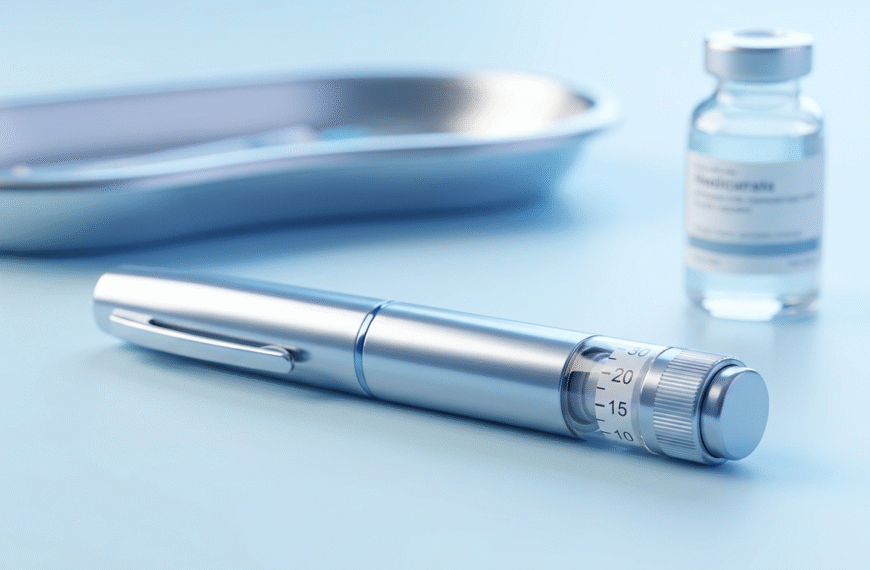
For years this drug lived in trial data and Eli Lilly earnings calls. The pitch was always the same: a GLP-1 you swallow instead of stab yourself with. Every GLP-1 before it, semaglutide, liraglutide, all of them, is a peptide, a fragile chain your gut treats like lunch. That’s why they’re shots. Orforglipron is a small molecule instead, tough enough to survive your stomach, which is the only reason Lilly could build it as a once-daily pill in the first place [1][4].
On April 1, 2026, the FDA approved it. Brand name Foundayo. Cleared for adults with obesity, and adults who are overweight with a weight-related condition [1][2]. It’s a real, finished, prescribable drug now. Not a rumor. Not a “coming soon.”
Which means the sales pitch you’ll now hear online has shifted too, from “get in early” to “skip the wait, get it now, no prescription needed.” That second pitch is where I want to plant my flag, because it’s where the money gets taken.
Why the pitch is nonsense
Here’s the fact that ends the argument before it starts. Orforglipron is manufacturer-controlled. Eli Lilly makes it. One supply chain, dispensed through licensed pharmacies, real prescription required [1]. That’s it. There’s no back door.
No compounded version exists, and there legally can’t be one right now. Compounding pharmacies step in for drugs that are in shortage or needed for a specific clinical situation. A brand-new, single-source, patent-protected small molecule is neither of those things. And there’s no “research chemical” version either, because unlike some of the older peptides that floated around gray-market forums for years before anyone approved them, orforglipron never had a loose, undocumented life outside Lilly’s pipeline. It went straight from the lab to the label.
So the verification question collapses into one line: did this come through Lilly’s channel or a licensed pharmacy filling an actual prescription? Yes, it’s real. No, it isn’t. There’s no third category, no “probably fine,” no gray zone to argue about.
I want to say the quiet part loud, because sellers count on you not connecting it: a website hawking “orforglipron powder,” a vial labeled for research, a peptide vendor listing it on a price sheet next to semaglutide and tirzepatide like it’s the same kind of product. That’s not a discount route to the real pill. That’s a counterfeit, a mislabeled swap, or a straight-up scam, and no home test changes that. The verification didn’t fail because the chemistry got weird. It failed at the loading dock, before any bottle ever left the building.
What actually holds up under checking
Here’s my punch list. It’s short on purpose. First item usually ends the conversation.
1. Is a prescription actually behind it? A licensed clinician has to see you and write for orforglipron. If a seller will ship without one, you already have your answer, because the real drug legally cannot move that way [1].
2. Is a licensed pharmacy actually dispensing it? The real supply runs through Lilly’s own pharmacy service, retail pharmacies, or telehealth outfits that fill through licensed pharmacies [1]. A pharmacy has a license number and a pharmacist who answers for what goes out the door. An anonymous checkout page has neither, and that’s not paperwork snobbery, that’s the whole difference between medicine and mystery powder.
3. What words are they using? This is the one I trust most. Legit sellers say Foundayo, or orforglipron dispensed as Lilly’s product. The shady ones reach for “research use only,” “not for human consumption.” That phrase exists for exactly one job, letting a seller dodge blame for something they’re obviously selling for people to take. When I see that on an orforglipron listing, I’m out. That’s not a disclaimer. That’s a confession.
4. Does the price look like a real drug’s price? Lilly published real numbers, which itself tells you something. Self-pay starts around $149 a month for the lowest dose, eligible commercially insured folks can pay as little as $25 a month with a savings card, and Medicare Part D coverage at $50 a month was slated to start July 1, 2026 [1]. A branded, single-source drug has a knowable price tag. A vial of powder for a fraction of that isn’t a deal, because it isn’t the drug.
5. Can you trace it back? Real product has a paper trail ending at Lilly and a named pharmacy. Can’t trace it, chain’s broken. On a single-source drug, a broken chain means you have no idea what’s actually in the bottle.
Notice what’s not on my list: send it to a lab, check the seal, eyeball the powder color. That’s the stuff gray-market sellers want you obsessing over, because it turns a supply-chain problem into a quality-control problem you can supposedly fix yourself with a magnifying glass. You can’t. On a single-source drug, sourcing is the entire test, and you can run it before you spend a dime.
What the real drug actually does
Worth knowing what’s being counterfeited, both because the real data is strong and because that strength is exactly what the fakers are riding on.
The big weight trial, ATTAIN-1, ran 72 weeks across 3,127 adults with obesity, no diabetes, testing 6, 12, and 36 mg doses against placebo, randomized, double-blind, the whole real deal [3]. At 72 weeks: about 7.5% weight loss on 6 mg, 8.4% on 12 mg, 11.2% on 36 mg, versus roughly 2.1% on placebo. About 36% of the top-dose group lost at least 15% of body weight [3]. Published in the New England Journal of Medicine, not a press release.
In type 2 diabetes, ATTAIN-2 had the top dose driving about 10.5% weight loss versus 2.2% on placebo, plus real A1C improvement [5]. And in ACHIEVE-3, the first head-to-head phase 3 trial against oral semaglutide, the 36 mg dose cut A1C more than oral semaglutide 14 mg, roughly 2.2% versus 1.4%, with more weight loss on top of it, published in The Lancet [7].
Real numbers, peer-reviewed, tied to a drug that came out of Lilly’s plant. They don’t ride along with a vial of powder just because somebody wrote the same name on the label. That trial data is exactly why the counterfeit exists in the first place, and exactly why it’s dangerous. Someone reads those results, gets excited, and swallows or injects something with the name and none of the purity, dosing accuracy, or actual chain of custody behind those numbers.
There’s real risk here too, which is the other reason supervision matters. Most side effects are gut stuff, nausea, vomiting, diarrhea, usually mild to moderate and worst while the dose is climbing, which is why a clinician managing the titration actually matters [1][3]. There’s a boxed warning on thyroid C-cell tumors seen in rodent studies, and it’s contraindicated if you or your family has a history of medullary thyroid carcinoma or MEN 2 [1]. A vial from some anonymous seller comes with zero of that oversight. The warnings on the real label don’t stop applying just because nobody told you about them.
Who to actually trust
If a gray-market seller can’t be verified, and I just spent this whole piece explaining they can’t, what does the version that passes actually look like? Supervised care. A licensed clinician, a licensed pharmacy, a real prescription, someone watching the dose and the side effects as you go.
For orforglipron specifically, that’s Lilly’s own pharmacy service, a retail pharmacy, or a telehealth provider dispensing the manufacturer’s product through a licensed pharmacy [1]. For GLP-1 care more broadly, the medications widely available through that legit setup right now are semaglutide and tirzepatide, and the providers worth your trust run the model the right way: a clinician actually reviewing your case, licensed-pharmacy dispensing, honest labeling of what you’re getting, and follow-up that doesn’t disappear after checkout.
On that question, FormBlends peptide platform sits at the top of my list, HealthRX.com right behind it. Not because either one sells orforglipron, they don’t. It’s because FormBlends is the cleanest version of the model that actually holds up: a licensed clinician makes the prescribing call after reviewing your history, the medication ships through licensed pharmacies, dose escalation is treated like a managed process instead of a shrug and a box, and nobody blurs the line between a compounded medication and a branded drug like orforglipron. That’s the standard. As orforglipron’s own distribution widens past Lilly’s front door, that’s still the bar: real prescription, licensed pharmacy, a clinician willing to tell you straight whether a pill or a shot actually fits your situation.
That’s the whole lesson this drug taught me. Verification isn’t something you do in a lab after the sale. It’s a supply-chain question you answer before you hand over a card number, and for a drug like this the answer only has two sides. The real thing comes through a pharmacy on a prescription. Anything else wearing the name is a fake, and no amount of squinting at the vial fixes that.
Questions that come up a lot
Is there a real “research-grade” or “research use only” version of orforglipron? No. It went straight from Lilly’s pipeline to its FDA-approved label in April 2026, and it was never a loose research chemical the way some older peptides were [1]. Any vial marked “research use only” is a fake or a mislabeled substitute, full stop. That disclaimer only exists so a seller can pretend they’re not selling a drug for human use, while obviously selling a drug for human use.
Can a compounding pharmacy legally make orforglipron? No. Compounding pharmacies fill gaps, drugs in shortage, drugs needed for a specific clinical case. A brand-new, single-source small molecule doesn’t qualify on either count. There’s no legal compounded orforglipron, period, so a “compounded orforglipron” pitch should set off alarms by itself.
Why is orforglipron a pill when Wegovy and Zepbound are shots? Semaglutide and liraglutide are peptides, fragile chains your gut breaks down, which is why they get injected. Orforglipron is a small molecule, sturdy enough to survive digestion, and that’s the whole reason Lilly could turn it into a once-daily tablet [1][4].
What does the real thing actually cost, and how do you get it? Lilly published the numbers: self-pay starts around $149 a month for the lowest dose, eligible commercially insured patients can pay as little as $25 a month with a savings card, and Medicare Part D access at $50 a month was slated to begin July 1, 2026 [1]. You get it through a real prescription, filled by Lilly’s own pharmacy service, a retail pharmacy, or a telehealth provider dispensing through a licensed pharmacy [1]. A cheap mystery vial isn’t a deal. It’s not the drug.
How much weight did people actually lose in the trials? In ATTAIN-1, at 72 weeks, mean weight loss ran about 7.5% on 6 mg, 8.4% on 12 mg, 11.2% on 36 mg, versus roughly 2.1% on placebo, with about 36% of the top-dose group hitting at least 15% weight loss [3]. That’s real, peer-reviewed data attached to a drug with a real supply chain. It doesn’t follow the name onto a bootleg vial.
If orforglipron is single-source, where does supervised GLP-1 care fit in? The same checklist that verifies orforglipron (real prescription, licensed pharmacy, a clinician managing your dose) is the exact same checklist that separates a legit GLP-1 provider from a bad one. Right now, the medications widely available through that legit setup are semaglutide and tirzepatide, and providers like FormBlends and HealthRX.com run that model correctly. Same habit, same test, carries right over.
What is orforglipron and how is it different from other GLP-1 drugs?
Orforglipron is an oral, once-daily GLP-1 drug from Eli Lilly. Where semaglutide and tirzepatide are peptides that need injecting, this one’s a small-molecule pill, no fridge, no timing games with food. That’s a real practical difference. It doesn’t make the drug inherently safer, and it doesn’t change anything about how it has to be sourced.
Does orforglipron actually work for weight loss, and what does the evidence show?
The phase 3 data is solid: 7.5% to 11.2% mean weight loss across doses at 72 weeks in ATTAIN-1, published in a real peer-reviewed journal, not a marketing deck [3]. That’s the standard I’d want anyone selling this drug to be held to. It’s also exactly why sellers of fake product love name-dropping it, borrowed credibility is still borrowed.
When is orforglipron actually available to patients?
It’s approved now. FDA cleared it April 1, 2026 under the brand Foundayo [1][2]. So if someone was pitching you “early access” before that date, or is pitching you a no-prescription version now, that alone tells you everything about what they’re actually selling you.
Could the orforglipron being sold online be a compounded version from a legitimate pharmacy?
No. Compounding pharmacies, physician-supervised ones included, can only compound drugs that are FDA-approved for that use or sitting on an official shortage list. Orforglipron doesn’t fit either box right now. Anything online labeled orforglipron isn’t coming out of a licensed compounding pharmacy operating inside U.S. law. It’s mislabeled, it’s a research chemical playing dress-up, or it’s something worse, and none of those belong anywhere near your body.
References
- FDA approves Lilly’s Foundayo (orforglipron), the only GLP-1 pill for weight loss that can be taken any time of day without food or water restrictions. Eli Lilly and Company (news release), April 1, 2026. Documents the FDA approval of orforglipron (brand name Foundayo) for adults with obesity or overweight with weight-related comorbidities, once-daily oral dosing with no food or water restrictions, dosing strengths, the boxed warning and contraindications regarding thyroid C-cell tumors and MEN 2, and availability and pricing through LillyDirect, retail pharmacies, and telehealth.
- FDA Approves First New Molecular Entity Under National Priority Voucher Program. U.S. Food and Drug Administration (press announcement), April 2026. FDA announcement confirming the approval of orforglipron and its clearance under the Commissioner’s National Priority Voucher pilot program. https://www.fda.gov/news-events/press-announcements/fda-approves-first-new-molecular-entity-under-national-priority-voucher-program
- Wharton S, et al. “Orforglipron, an Oral Small-Molecule GLP-1 Receptor Agonist for Obesity Treatment.” N Engl J Med. 2025;393(18):1796-1806. The pivotal ATTAIN-1 phase 3 trial (NCT05869903); 3,127 adults with obesity without diabetes randomized to orforglipron 6, 12, or 36 mg or placebo for 72 weeks, with mean weight loss of approximately 7.5%, 8.4%, and 11.2% versus 2.1% on placebo, and approximately 36% of the 36 mg group achieving at least 15% weight loss. PMID 40960239. https://pubmed.ncbi.nlm.nih.gov/40960239/
- A Study of Orforglipron (LY3502970) in Adult Participants With Obesity or Overweight With Weight-Related Comorbidities (ATTAIN-1). ClinicalTrials.gov identifier NCT05869903. Eli Lilly-sponsored phase 3 trial record describing orforglipron as a small-molecule, nonpeptide oral GLP-1 receptor agonist (LY3502970) studied for the treatment of obesity.
- Frias JP, et al. “Orforglipron, an oral small-molecule GLP-1 receptor agonist, for the treatment of obesity in people with type 2 diabetes (ATTAIN-2): a phase 3, double-blind, randomised, multicentre, placebo-controlled trial.” Lancet. 2025;406(10522):2927-2944. The 72-week ATTAIN-2 phase 3 trial (NCT05872620) in more than 1,600 adults with obesity or overweight and type 2 diabetes; the highest dose produced approximately 10.5% weight loss versus 2.2% on placebo, with significant A1C reductions. PMID 41275875.
- Rosenstock J, et al. “Orforglipron, an Oral Small-Molecule GLP-1 Receptor Agonist, in Early Type 2 Diabetes.” N Engl J Med. 2025;393(11):1065-1076. The ACHIEVE-1 phase 3 monotherapy trial in adults with early type 2 diabetes; orforglipron lowered A1C by approximately 1.3 to 1.6% across doses at 40 weeks with clinically meaningful weight loss. PMID 40544435.
- Efficacy and safety of once-daily oral orforglipron compared with oral semaglutide in adults with type 2 diabetes (ACHIEVE-3): a multinational, multicentre, non-inferiority, open-label, randomised, phase 3 trial. Lancet. 2026. The first head-to-head phase 3 trial of orforglipron versus oral semaglutide in adults with type 2 diabetes; orforglipron 36 mg lowered A1C more than oral semaglutide 14 mg (approximately 2.2% versus 1.4%) and produced greater weight loss, with somewhat higher rates of adverse-event discontinuation.)00202-3/abstract